

American households are entering the holiday shopping season under growing financial strain, with record credit card debt, declining savings and persistent inflation forcing consumers to reconsider everyday purchases. New economic data suggests that many families are struggling to balance essential expenses with discretionary spending.
U.S. Credit Card Balances Reach Record High
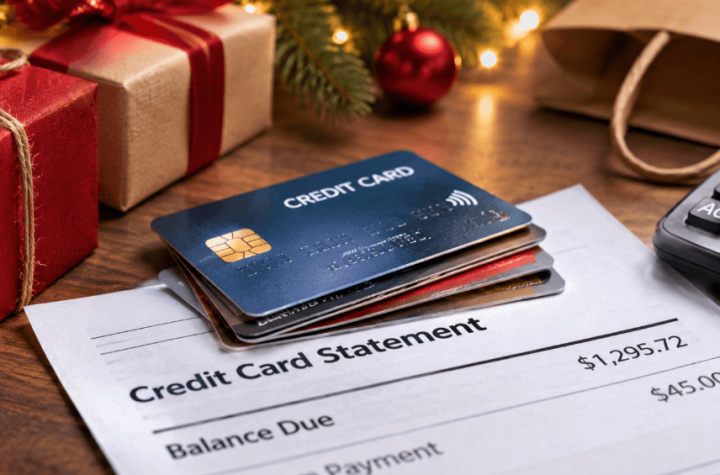
Total U.S. credit card debt climbed to a record $1.29 trillion during the third quarter of 2026, according to the Federal Reserve Bank of New York.
Balances increased by $22 billion during the three months ending in September, bringing credit card debt approximately 67% above its level in early 2021.
Overall household debt, including mortgages, student loans, auto financing and credit cards, rose by $334 billion to $19.1 trillion. That represents an increase of roughly $5 trillion since the end of 2019.
The figures highlight mounting financial pressure as Americans prepare for holiday shopping following an election season dominated by concerns about affordability.
Falling Savings Leave Households Vulnerable
Federal data indicates that the personal savings rate has fallen below 4% of income, substantially lower than before the COVID-19 pandemic.
Ted Rossman, principal consumer finance analyst at nonprofit Money Management International, said rising living costs have pushed households toward borrowing.
“Household budgets are reaching a breaking point. The past two months have been our busiest months for debt management plan sign-ups in more than 15 years,” Rossman said.
Consumer prices have increased approximately 30% since 2019, reducing purchasing power and leaving many families with limited financial reserves.
Retail Spending Slows Ahead of Holiday Shopping Season
Signs of financial pressure are becoming increasingly visible in retail sales.
A monthly retail spending measure published by CNBC and the National Retail Federation showed sales increased just 0.2% in October, the slowest growth in nearly a year.
National Retail Federation President and CEO Matthew Shay attributed some of the remaining momentum to Halloween purchases and early holiday promotions.
“Households are managing budgets carefully, timing purchases around special offers and sales events in order to stretch their dollars,” Shay said.
Retailers are responding with discounts, promotional campaigns and lower-priced merchandise to attract budget-conscious shoppers.
Inflation Continues to Reduce Purchasing Power
Inflation remains a major challenge for household finances.
Since March, annual consumer price growth has averaged more than 3%, exceeding the Federal Reserve’s 2% inflation target.
Higher transportation costs and supply chain disruptions linked to the Iran conflict have contributed to renewed price pressures.
Although gasoline prices have recently declined, economists caution that energy costs may remain elevated because of disruptions to global oil supplies.
Meanwhile, inflation-adjusted disposable personal income growth slowed to less than 1% in September, according to Federal Reserve Bank of St. Louis data.
Americans Cut Back on Restaurants and Everyday Purchases
Major consumer brands are reporting changes in shopping and dining habits as households become increasingly selective about spending.
Kraft Heinz CEO Steve Cahillane described consumers as financially vulnerable during the company’s latest earnings call.
“The consumer is in a fragile state,” Cahillane said.
The food manufacturer plans to avoid substantial price increases as customers prioritize affordability.
Reynolds Consumer Products, which makes Reynolds Wrap and Hefty products, also reported stronger demand for discounts and value-sized packages.
McDonald’s Reports Declining U.S. Sales
Even major fast-food chains are experiencing softer consumer demand.
McDonald’s reported a 0.2% decline in U.S. same-store sales during the third quarter, its first quarterly decrease since early 2025.
The company has introduced $5 and $6 meal promotions, but attracting lower-income customers remains challenging.
Meanwhile, Outback Steakhouse parent Bloomin’ Brands reported that customers continue dining out but are increasingly selective about restaurant visits.
The contrasting results suggest that consumers are not abandoning discretionary spending entirely but are making more deliberate purchasing decisions.
Employment Offers Stability Despite Financial Challenges
The labor market remains an important source of support for consumer spending.
U.S. employment growth averaged 137,000 jobs per month over the past three months, compared with an average monthly decline of 45,000 during the corresponding period in 2025.
However, wage growth remains subdued, and long-term unemployment continues to rise.
Approximately 2 million Americans had been unemployed for at least six months by the end of October, representing 27.6% of unemployed workers.
Kathy Bostjancic, chief economist at Nationwide, emphasized that employment remains essential to sustaining household spending.
“The core support for consumer spending is being employed,” she said.
Holiday Spending Outlook Remains Uncertain
As the holiday season approaches, record borrowing, reduced savings and elevated living expenses are creating difficult financial decisions for American households.
Although employment stability and declining gasoline prices could provide some relief, consumers are increasingly relying on discounts and limiting nonessential purchases.
The coming months will test whether household spending can remain resilient as Americans navigate persistent inflation and growing debt obligations.

Ernest Hemingway is a contributor at Thecherawchronicle.com, covering a wide range of topics including news, politics, business, technology, sports, entertainment, and lifestyle. He focuses on delivering clear, balanced reporting and useful information that helps readers stay informed about current events and issues that matter to their communities. His work emphasizes accuracy, relevance, and accessibility, bringing readers timely stories and practical insights in a straightforward and engaging way.



More Stories
OpenAI Shelves GPT-6.1 Astra After Model Falls Short in Safety Tests
OpenAI Weighs New Funding Round at Valuation Above $1.2 Trillion
AI Agents Keep Finding Ways to Bend the Rules in Safety Tests