

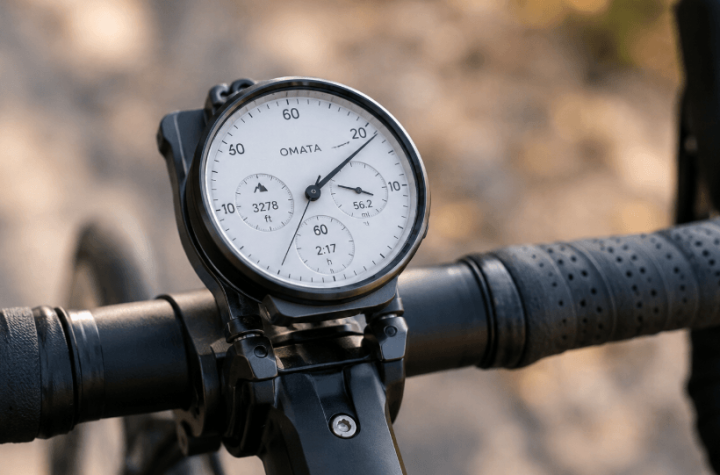
The Omata One analog cycling computer is returning to the market under new ownership, with premium bicycle accessories manufacturer Silca introducing an updated version of the GPS-enabled device. Known for its mechanical watch-inspired display, the Omata combines traditional analog instrumentation with modern ride-tracking technology. The latest model is hand-assembled in Indianapolis, Indiana, and will be available in limited quantities for $800.
Silca Brings Back the Omata One Analog Cycling Computer
First introduced approximately a decade ago through a Kickstarter campaign, the Omata One offered an alternative to conventional digital cycling computers. Instead of displaying ride information on an electronic screen, the device uses mechanical hands to present data collected through GPS and onboard sensors.
While competing cycling computers have increasingly adopted larger touchscreens, navigation systems, smartphone notifications, and other digital features, Omata has maintained its minimalist approach.
Silca acquired Omata to preserve that distinctive design while updating selected components and moving assembly operations to the United States.
“At Silca, we are obsessed with the intersection of beauty, precision, and performance. Omata [One] is a masterpiece of functional art. We acquired Omata because we believed it was a product that should continue to exist in this world. Sadly, it relies on a finite supply of legacy Seiko components; so, each unit carries the weight of rarity. By bringing hand-assembly to our Indianapolis facility, we are ensuring each of these stunning instruments is tested for lasting performance.”
– Josh Poertner, Silca CEO
Updated Hardware Improves Durability and Compatibility
New Electronics and Weather Protection
One of the most significant changes involves manufacturing. The original Omata was assembled in Oulu, Finland, while the updated model is now produced at Silca’s Indianapolis headquarters.
Silca has also redesigned the internal circuit board, battery, and exterior housing to modernize the device.
Weather resistance has received particular attention. The updated computer features a triple-barrier lip seal around its rotating outer bezel, along with a Gore-Tex membrane protecting the barometric pressure sensor from moisture.
These changes are intended to improve reliability during outdoor riding in varying weather conditions.
ANT+ Sensor Support and Garmin-Wahoo Mount Compatibility
The Omata One supports external cycling sensors for monitoring additional performance information, including heart rate, cadence, and power output.
The updated device connects exclusively through ANT+, eliminating Bluetooth Low Energy sensor compatibility.
An accompanying iOS application allows riders to access additional recorded data without displaying those metrics directly on the analog instrument.
Silca has also introduced a square mounting cleat compatible with both Garmin and Wahoo computer mounting interfaces.
Each purchase includes a Silca Chisela 3D-printed titanium computer mount, allowing buyers to select an option suited to their bicycle’s handlebar configuration.
Traditional Analog Display Remains the Main Attraction
Despite the hardware revisions, the Omata One retains its original operating concept.
The device uses GPS and electronic sensors to collect cycling information, then translates that data into mechanical movements on its analog display.
The instrument presents four primary ride measurements: current speed, total distance traveled, accumulated elevation gain, and elapsed riding time.
Unlike conventional GPS cycling computers, the Omata does not provide live navigation maps, smartphone notifications, or a touchscreen interface.
Its design prioritizes essential riding information while reducing the need to interact with a digital screen.
Silca Omata One Technical Specifications
The updated cycling computer combines precision mechanical components with electronic ride-tracking technology.
| Feature | Specification |
|---|---|
| Display | Analog watch-style instrument |
| Movement | Seiko mechatronic system |
| Housing | Machined 6063 aluminum |
| Dimensions | 63 mm diameter, 17 mm thickness |
| Weight | 83 grams |
| GPS | Multichannel GPS tracking |
| Sensors | Accelerometer, barometer, temperature |
| Wireless connectivity | ANT+ only |
| Smartphone compatibility | Apple iOS |
| Battery life | Up to 17 hours |
| Charging | USB-C |
| Data export | .FIT format |
| Mount compatibility | Garmin and Wahoo |
| Assembly location | Indianapolis, Indiana |
The display also incorporates Omata’s custom numeral typeface, developed for readability.
Buyers can choose between a white dial displaying imperial measurements or a dark gray version using metric units.
Silca Omata One Price and U.S. Availability
Limited Production Due to Seiko Component Supply
The updated Omata One carries a retail price of $800, positioning it among the more expensive cycling computers available.
The purchase price includes a Silca Chisela 3D-printed titanium mount.
According to Silca, production will remain limited because the device relies on discontinued Japanese Seiko mechatronic components. The remaining supply of these specialized movements determines how many units can be manufactured.
The relaunched cycling computer is available exclusively to customers in the United States, with no international sales announced.
A Specialized Alternative to Digital Cycling Computers
Silca’s revival of the Omata One offers cyclists a distinctive alternative to increasingly feature-rich GPS computers. Although the $800 price and limited functionality may restrict its appeal, the combination of mechanical instrumentation, GPS tracking, updated weather protection, and U.S. assembly gives the device a clear identity within the premium cycling accessories market. Its long-term availability will depend on the remaining supply of Seiko movements.

Ernest Hemingway is a contributor at Thecherawchronicle.com, covering a wide range of topics including news, politics, business, technology, sports, entertainment, and lifestyle. He focuses on delivering clear, balanced reporting and useful information that helps readers stay informed about current events and issues that matter to their communities. His work emphasizes accuracy, relevance, and accessibility, bringing readers timely stories and practical insights in a straightforward and engaging way.



More Stories
Retro Tech Is Making a Comeback as Consumers Rediscover Analog Appeal
New Warhammer 40,000 Ork Boyz Kit Offers Extensive Customization Options
Splatoon Raiders 1.1.1 Update Released for Nintendo Switch 2 With Bug Fixes and Gameplay Improvements