
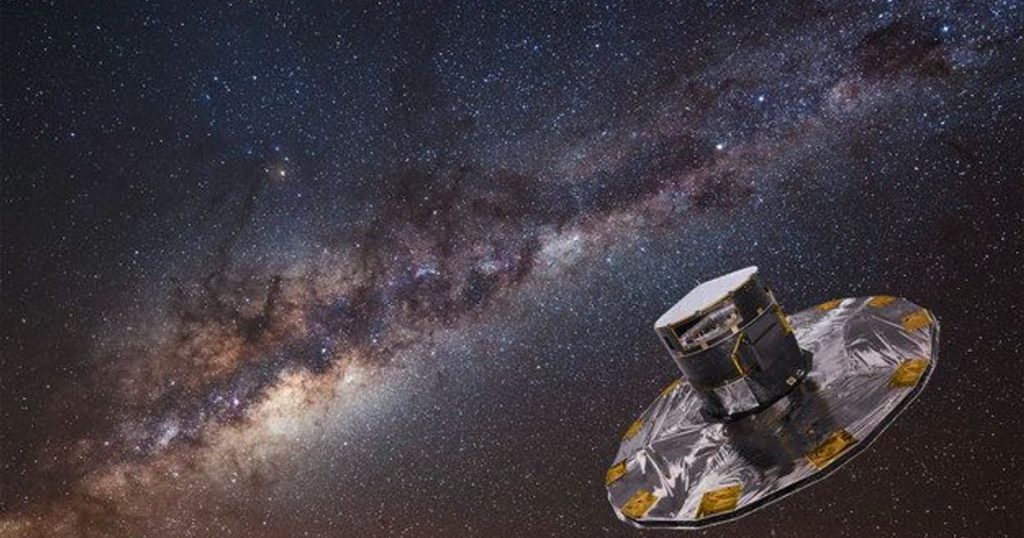
In April, Gaia was hit at high speed by a tiny particle smaller than a grain of sand. Earth is constantly bombarded by so-called micrometeoroids, but they burn up in the atmosphere. Because Gaia is located 1.5 million kilometers from our planet—far from Earth’s protective atmosphere—it is often hit by micrometeoroids.
Normally, a space telescope can handle this pretty well, but in this case the high-speed particle hit at exactly the wrong angle, damaging Gaia’s shield. This created a hole through which sunlight could “sneak in”, disturbing the very sensitive sensors.
While Gaia’s technicians were working on this problem, another one emerged: One of the space telescope’s more than a hundred CCD sensors, which convert light into electrical signals, had failed. This sensor was crucial for detecting stars. As a result, Gaia began recording thousands of false detections. The disruption is suspected to have been caused by the Sun’s big explosion last spring.
Experts from ESA and the space telescope’s manufacturer, Airbus Defence and Space, have been working closely in recent months to solve the problems that have arisen. Of course, with a space telescope 1.5 million kilometres away, no parts can be replaced, but in this case the worst problems – stray light and false detections – can be circumvented with the help of software modifications. In fact, technicians have taken the opportunity to refocus the optics of the two telescopes that make up Gaia.

Maya Angelou is a contributor to The Cheraw Chronicle, covering a broad range of topics including news, politics, business, technology, sports, entertainment, and lifestyle. She focuses on delivering clear reporting, useful information, and timely coverage of current events that matter to readers. Her work aims to provide balanced perspectives and accessible insights, helping audiences stay informed about developments in their communities and beyond through accurate, reader-focused storytelling.



More Stories
JWST Observations Suggest Mysterious Changes in Chariklo’s Rings
Updated Northern Lights Alert: Aurora May Be Visible Across 22 States Friday Night
Venus-Jupiter Conjunction 2026 Dazzles Skywatchers Around the World